
Estimated reading time: 7 minutes
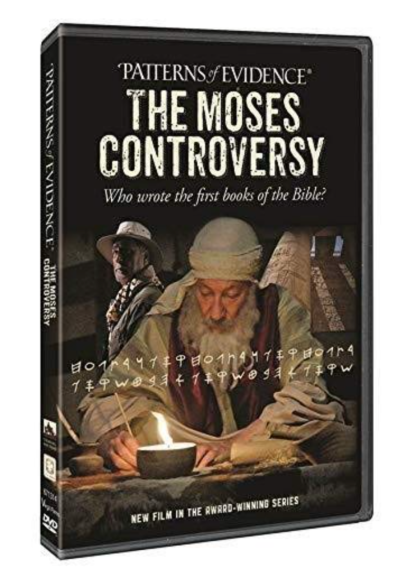
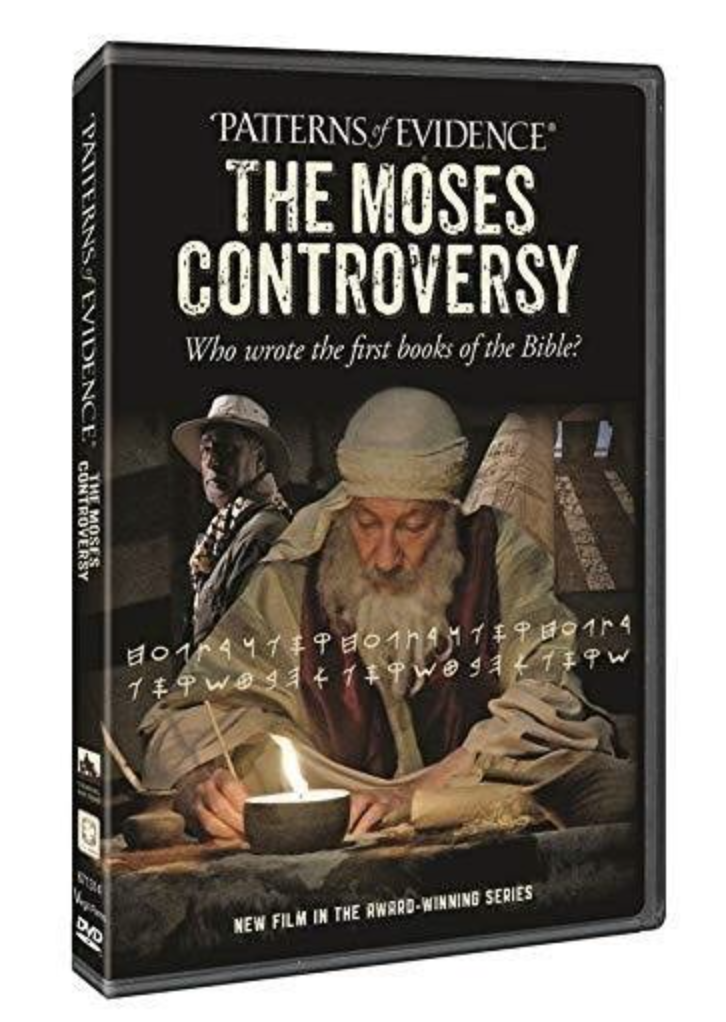
The Moses Controversy
Hopefully, you had a chance to watch the “Moses Controversy” film since my last email. If you did, I hope you liked it. If not, no worries, but it’ll take much more faith in me to believe what I share in this email today.
Who was Moses anyway?
Before we begin, I want to explain why this “stuff” matters to me and should matter to you. Over my 60+ years of being a Christian, I’ve heard an increasing number of criticisms about God. “Did God really part the Red Sea?” “Did God really send a flood?” Those who make such arguments diminish the power and image of God by seeking alternative, “natural” events to explain what happened (if anything). Such arguments not only challenge God’s capabilities but also diminish the reliability of His Word – the Bible. As someone with a strong scientific background, I used to naively think that such questioning was acceptable. Now, I don’t. When we start to believe those who contradict what God says in His Word, we lose a portion of our faith in Him. He’s bigger than we could ever imagine. And, frankly, He could care less what the “experts” think. If the Bible truly is the inspired Word of God given to us by divine inspiration, we can’t keep rewriting those portions that don’t agree with what others say. What excites me about men like Tim MaHoney is: He believes God’s version of the Bible and has dedicated his life to proving God’s side!
Now, on to our discussion about Moses. One thing I thought was missing in the film was a bit more history on Moses and how he fit into the narrative for WHEN he could have written the first five books of the Bible. There were five major periods in Moses’ life, yet only one in which he could have written the Torah (the first five books of the Bible).
The first four periods just don’t make sense:
- Moses, the rescued Jewish child: As the Bible reports, Moses was born a Jew at a time when the Jews were slaves to Pharoah. But, because of an edict by Pharoah to kill all the male children of every Jew, his mother put him in a basket and floated him down the Nile River, where Pharoah’s daughter discovered him. He was then adopted into Pharoah’s household and raised as an Egyptian.
- Moses, the Egyptian: From his earliest memories, Moses only knew what he was taught as a “son” of Pharoah. He learned Egyptian culture, writings, language, and history. Although the Bible suggests that he was aware of his Jewish heritage, it seems certain that it was only a vague awareness.
- Moses, the shepherd: After killing an Egyptian taskmaster for beating a Jewish slave, Moses fled to Midian, a land East of Egypt, at the age of ~40 years. According to Bible.org, the “Midianites originated from Abraham through his second wife Keturahwhom he married after Sarah died (Gen 25:1-2). God chose to have the Covenantal promises given through Sarah’s son Isaac. So, Moses and this family were distantly related, very distant cousins, yet both coming from Abraham.” ((https://bible.org/seriespage/4-zipporah-exodus-424-26)) Since their lineage was different from the Jews, their customs and language were most likely different as well. While in Midian, Moses married a Midianite woman, had two sons, and became a shepherd until God called him at the age of ~80.
- Moses, the Rescuer: Although the actual time is not recorded, it probably didn’t take more than a few months for all the events leading up to the Exodus to take place. I think Moses was too busy during this time to write any books.
The last stage of Moses’ life makes the most sense:
- Moses, the Leader of his people: After their escape from the slavery of Egypt, Moses spent 40 years in the wilderness with his people. The mystery is – WHY? A normal trip along the established trade routes (close to the sea) would have taken just a few weeks. The Bible leads us to believe that the delay was because the Jews rebelled against God, and He punished them. But I think that was only part of the reason. As Tim Mahoney’s film points out, it took so long because God had an assignment for Moses – to write down the history of the world to that point!
Timing makes a huge difference!
When you examine the evidence, this last period in Moses’ life was the ONLY time he could have written these books. Think about it:
- Prior to leaving Egypt, Moses knew, at best, only two languages: Egyptian hieroglyphs and whatever language was spoken by the Midianites (and we do not know if they had a written form of their language).
- Based on Mahoney’s film, there appears to have existed some form of a pre-Hebrew-like language at the time of Moses. But even if there was such a language, where would Moses have learned it? It seems clear he did not learn it from the Egyptians, and there is no evidence he learned it in Midian.
- One of the more popular theories has been that Moses never wrote anything because he lived in a time when most ideas were communicated via oral traditions. The problem with that idea, according to Mahoney, was that there were early writings resembling Hebrew (i.e., “Hebrew 1.0”, “Hebrew 2.0”, and “Hebrew 3.0”) around the time of Moses. If Moses did indeed write the books, he probably did so in Hebrew 1.0, which, according to Mahoney, appeared (mysteriously or miraculously) while Moses was in the desert.
- According to Exodus 24:4, “Moses wrote down all the words of the Lord.” And it says in verse 18 that he was with the Lord “for forty days and forty nights.” As Mahoney’s research suggests, perhaps the best explanation for the origination of the Hebrew language is that God schooled Moses while on Mt. Sinai during the time recorded in Exodus 24! Afterall, Exodus 31:18 states that: When the Lord finished speaking to Moses on Mount Sinai, he gave him the two tablets of the covenant law, the tablets of stone inscribed by the finger of God. (NIV) If Moses was illiterate and knew no form of written language (as some would claim), how would he be able to read what God had written?
- So, was the language that God taught Moses Hebrew? According to an article by Universal Translation Services, it is not. ((https://www.universal-translation-services.com/what-language-is-the-torah-written-in/)) “It is actually Paleo-Hebrew – a more ancient form of the language. The first five books of the Bible were written in this language in the 7th century BCE. However, by the 4th century BCE, Aramaic had become the dominant language spoken by the Jewish people. Thus, many of the later books of the Bible were written in Aramaic. The text of the Torah has been copied by hand over and over again for thousands of years.” This position seems to agree with Mahoney’s conclusions if you consider “Paleo-Hebrew” to be “Hebrew 1.0.”
The final piece we need to insert into this puzzle is this: The Jews were absolute masters at making copies of their holy documents. Because they were handed to them by God, they were obsessed with preserving the accuracy of His Holy message! A scribe charged with making a copy of the Torah was required to know exactly how many words, spaces, and letters appeared on each page. When they made a copy, if the numbers didn’t match, the page was destroyed! Because of this, when different texts from different periods are compared to other texts, little or no variation is found. Yet, many of our major historical manuscripts, from which much of our early history is derived, may have only one or two manuscripts in existence.
I hope this study proved interesting and enlightening. Over the years, I’ve heard and read many people try to propose that what we read in the Bible is not true – that many accounts are just fanciful stories made up to make God look like something He’s not. As a defense, many believers offer that what happened doesn’t matter. The important part is the message. I think that attitude diminishes God’s power and questions the divine inspiration of scripture. I rejoice whenever someone (like Tim Mahoney) finds a path where the evidence actually supports what God has told us.
Like what you read? Don’t miss the next edition! Subscribe to my posts.
