

Estimated Reading Time: 12 minutes
Note: Years ago, I wrote what was actually my first book. It has a working title of “Why God?” and is intended to explore some of the issues and challenges standing in the way of truly discovering, understanding, and believing that there is a God. The book explores what God is like, and how we can learn more about Him. As with many first works, this manuscript has yet to see the light of day. This blog is my attempt to resurrect a piece of it and see if I want to attempt the rest.
Is Our Earth Special?
Since the beginning of time, humanity has looked to the heavens and thought: “There must be a power greater than us!” Ever since then, we have tried every conceivable way to contact that power, reason with that power, appeal to that power, and even (in vain) to deceive that power or bribe that power. On one hand, we find it a power that is impossible to ignore, but on the other hand, we find it unbelievably frustrating to communicate with. Can you relate?
Perhaps, we’ve been going about this the wrong way. IF there is a power out there that is responsible for all the vastness of the universe and all the unbelievable diversity we find on Earth (including us), THEN why are we so vain as to think this power would want anything to do with us? Think about it. Who are we to such a power? Maybe we are the top dog on this planet, but there are trillions of other planets out there. If one power made them all, we are probably just a meaningless speck to this power – an isolated experiment in an infinite array of experiments.
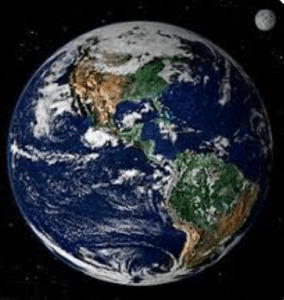
Before we can validate that assumption, it might help to take a closer look at this rock we live on. Just how unique are we in this universe of planets? Until recently, that was a near-impossible question to answer. It required the ability to search the skies to see if there were any other planets like ours (affectionately called a “Goldilocks” planet – ones that are “just right” for life). The only credible study done to answer this question was done using the Kepler telescope back in 2018 to search for planets that existed within so-called “Goldilocks zones” – zones that were located in orbits close enough to a star to be warm, but not too hot, yet far enough to be cool but not too cold. This was the only criterion used in this study, and, in the small region of space explored, “hundreds” of candidates were identified. So, maybe we’re not so special after all. But is judging a planet by just one criterion fair? To answer the question, “Are we special?” we need to dig a bit deeper and explore what, if anything, makes Earth absolutely different from all the planets in the universe.
Our Unique Planetary Specifications
To gain a better understanding of the complexity of that question, I’d like to consult with Dr. Hugh Ross, an astrophysicist (See Reference below). Hugh has dedicated his life to understanding what makes Earth capable of supporting life. His conclusions have literally rocked the scientific world by revealing the absolute miracle that our planet truly is. Below are just a few of his conclusions:
- Goldilocks Zone: Yes! The Earth certainly qualifies in this category. If we were in the orbit of Venus, we’d have an average temperature of 867º F – way too hot! If we were in the orbit of Mars, we’d have an average temperature of -80º F – way too cold! The orbit we’re in is “just right!”
- Axis Tilt: The fact that the Earth’s axis tilts ~23.4º ensures that both the Northern and Southern hemispheres get heated and cooled equally throughout the year. If this were not so, one half of the planet would be frozen while the other half would be unbearably hot. Yet, if this tilt were varied by more than +/- 1 degree, the balance would be lost, and the planet’s temperatures would not support life.
- Orbit around the Sun: The Earth makes its trip around the Sun every 365.25 days. This time allows for four distinctly different seasons to occur on most of the Earth. The seasons make for ideal growing times for plants to fully mature, animals to mate, and the Earth to renew itself. These renewing cycles promote life and its diversity. Even minor changes in our time around the sun would be devastating to life on this planet.
- Gravity: The density of the mass of the Earth dictates a precise gravitational pull. If it were any stronger, we’d retain too much ammonia and methane and die. If it were any weaker, we’d lose too much water into the atmosphere and die.
- Magnetic Field: Our magnetic field is one of two shields that protect us from the sun’s radiation (the other is our atmosphere). It is precisely tuned to do that to optimum effectiveness. A stronger field would kill most life with constant and severe thunder and lightning storms. Too weak, and the sun’s rays would burn us up.
- Atmosphere: 20% oxygen to 80% nitrogen is the perfect formula for life. Any more oxygen, and life would be too robust to handle, and any less, well, climb a mountain and you’ll see.
- The Moon: Our moon isn’t just a pretty little ball that makes for a romantic evening. It is just large enough and dense enough to affect our oceans and create tides. Tides are just one more example of how the Earth takes care of itself. If we didn’t have a moon, or if we had several moons, that balance would be disrupted, and the ocean would not be our friend.
These are just a few of the factors that make our planet nothing less than a miracle. And, to date, no probe nor telescope has given us any indication that a planet with all these very detailed specs exists anywhere in the universe. Add to that the fact that the SETI (Search for Extraterrestrial Intelligence) Project has been listening for a signal that would indicate life from anywhere in the universe since 1959, and to date, they have not heard a peep.
The Miracle of Life
Based on the above, I believe we must conclude that we inhabit a very special planet. But that is definitely not where the miracles stop! Look around you! This is not a bad place to live. According to various reports, there are between 8-10 million uniquely different species living on our planet. And, for years, science would have us believe that all these species evolved from one single-celled organism! At the end of this blog, I’ve provided a number of books that support what I’m about to say here, but, frankly, I don’t think I need much support. Let’s approach this problem logically and ask just one question: How did life develop?[1]
- It started with a rock: At some point, the Earth was just one big rock with a lot of lava, lightning, ammonia, and very little oxygen – not the best formula for starting life. This began some 4.5 billion years ago (some say as long as 17 billion). How we came to become a planet is a mystery, but many think we were a result of “The Big Bang.” Explaining that would take several blogs. Suffice to say that all planets and stars are the product of one massive explosion.
- The rock cooled: OK, being in the Goldilocks Zone helped. But somehow this rock needed a lot of moisture to cool it. Where did all that water come from? When we look at other planets, one of the rarest things to find is water. And, if it exists, there isn’t much to it, or what does exist is frozen. Then, to create life, scientists believe that more “stuff” was needed to make that happen. But what type of “stuff” would it take to support that first single-celled organism? Well, that’s where it gets sticky. Some very bright scientists put pen to paper and figured out that it would take hundreds of billions of years just for this one cell to magically come to life in a random soup of chemicals (if ever!)[2] And let’s by all means qualify what we mean by life. There are three criteria that this cell must meet:
- Creating its own energy: All things living must consume something to live. The process of consumption releases energy in the form of heat. When that process stops, you’re dead.
- Replicate: Living things replicate. If they don’t replicate, they die out. Besides, how is this one cell going to evolve into 8-10 million species if it doesn’t replicate?
- Store Information: In order to replicate, an organism needs to be able to store the information that defines who it is. This is what DNA is all about. Again, thinking ahead, how would this very simple cell, with the most basic DNA, somehow evolve/mutate into 8-10 million variations, all of which are infinitely more complex than it? In science, there is a theory that all things proceed to a state of chaos. For this cell to evolve into increasingly more complex organisms violates that basic principle.
- The Rock got covered: Somehow, our amazing rock got covered with water, plant life, animal life, sea life, bird life, insects, etc., in such rapid fashion that it would be impossible to explain how that one cell could have accomplished all that so fast. The truth is, it could not. There would have to be thousands of parallel paths for hundreds of new species all evolving at the same time! Think about it! How did the food that was needed for a predator to survive evolve in time to feed that predator? Think of all the combinations that would have had to evolve along parallel paths that were timed to absolute perfection! Again, our scientist friends have calculated that (if it were possible – and it is not) it would take more time to accomplish this feat than the entire age of the universe. Even if there were some type of strange radioactivity stimulating this poor cell to mutate all over the place, there is no way it could have resulted in the kind of sophisticated diversity we see on this planet today.
- Life Blossomed: If you believe that we moved from the so-called one-cell organism (cell zero) to humans along a trail where each new generation occurred by pure chance, then consider this: that cell had only one neuron that had only one connection producing one response. Our human brains today have over 86 billion neurons, with over 100 trillion connections, resulting in an astonishing number of outcomes. Look at what we humans have accomplished and then ask yourself, “Was this the result of a simple throw of the dice?” Surely, there had to be a “Master Designer” orchestrating it all!
Thus, the only logical explanation is to go back to what our ancestors concluded before all this so-called intelligence got in the way – our planet was designed by a power far greater than us, with an intelligence beyond our imagination. In other words, God did it!
Why is this Concept so Hard?
I think that the reason why some people reject this conclusion is because:
- Without God, humanity can be the top dog, decide what is relevant, and be masters of their own fate.
- With God, we are subservient to a higher power that will decide our fate.
We are a people who like to be in control. Believing in God relinquishes that control. Thus, we will look for any excuse we can to rationalize that God does not exist. Our greatest fear is that God will force us to conform to someone we do not want to be. The truth is, ignoring God will not make Him go away. And, for those who take the time to get to know Him, we discover that submitting to God is not as bad as it seems. God can (and will) protect us and take care of us in ways too good to imagine (After all, He created us to be the individuals that we are). But how can we know this? Remember the frustration of our ancestors? It is one thing to believe in God. Yet, to communicate with Him seems impossible.
So, the question remains: Does this God, who has done so many incredible things, want to communicate with us? Or, is He too busy and can’t be bothered? I believe that the answer lies in recognizing that no power would go to all this trouble unless He did it to show us we were special — to Him! How do I know? The Bible told me!
God’s Message to Us: The Bible
If you haven’t read my blog, “Is the ENTIRE Bible a Message Sent to us from God?,” then you should before finishing this blog. If you study the Bible in its entirety, it will provide answers to almost any question you will have in this life. But, with respect to the Earth and how we got here, I’ll just share two excerpts:
- God has shown himself to us (humanity): 20 There are things about him that people cannot see—his eternal power and all the things that make him God. But since the beginning of the world, those things (his power and all the things He made) have been easy to understand by what God has made. (i.e., they are undeniable creations of God) So people have no excuse for the bad things they do. 21 They knew God, but they did not give glory to God or thank him. Their thinking became useless. Their foolish minds were filled with darkness. 22 They said they were wise, but they became fools. Romans 1:19-22 NCV
- God has created each one of us individually, and by thoughtful design: 13 You made my whole being; you formed me in my mother’s body. Psalms 139:13 NCV In other words, God is actively involved in the creation process for each and every one of us! We are not an accident nor the result of a random process!
References:
- “The Fingerprint of God”, by Hugh Ross. Promise Publishing Company (1991 – 2nd edition).
- “I Don’t Have Enough Faith to be an Atheist”, by Norman L. Geisler & Frank Turek. Crossway (2004)
- “The Creation Hypothesis”, by J.P. Moreland. InterVarsity Press (1994)
[1] If you’re wondering about how all this fits into the creation story in the Book of Genesis in the Bible, you’ll have to wait for a future blog where I’ll cover that. Suffice to say, there’s a way it all comes together.
[2] Bear in mind that no scientist has, to date, been able to create life in a test tube. They have tried to duplicate what they call “the primordial soup” to no avail.
Like what you read? Don’t miss the next edition! Subscribe to my posts.
